

How to Soften New Linen: 5 Gentle Methods That Actually Work
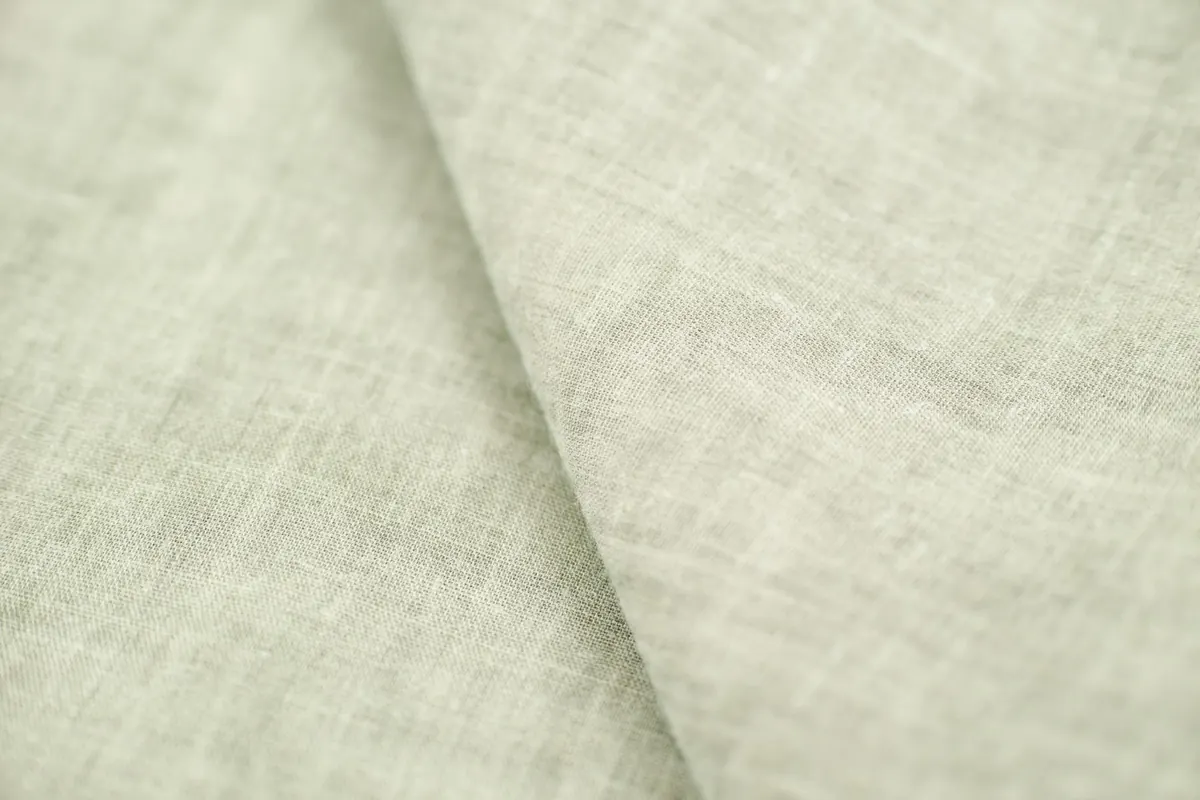
New linen arrives with a crisp, faintly papery snap. It holds a fold, feels cool to the touch and can seem almost stiff enough to stand up on its own. That stiffness is not a fault, and it is not permanent.
What you are feeling is a combination of the natural pectin in the flax fibre and the sizing applied during weaving to keep the cloth taut on the loom. Both wash out. The fibre underneath softens every time it is wetted, flexed and dried. You can hurry that process along, but not by being rough with it — hot water, bleach and fabric softener take the stiffness out of linen along with its strength. Here are five gentler methods, roughly in the order worth trying them.
Why new linen feels stiff
Flax fibres are long, straight and almost entirely without the natural crimp of cotton or wool. Lining them up like that produces a strong, cool, hard-wearing cloth. It also produces something closer to a crisp envelope than a soft shirt.
Weight and finish matter as much as fibre. A heavy 190gsm tablecloth and a lighter stonewashed sheet will not behave the same way. Stonewashed or garment-washed linen has already been tumbled, so it arrives halfway there. Raw linen straight off the loom needs more patience. Expect two to four washes before it feels properly relaxed, and longer for heavy weaves.
1. Give it a genuinely gentle first wash
Most of the stiffening agents in new linen come out in the wash. The trick is removing them without abrading the cloth.
- Wash new linen on its own for the first two cycles. It sheds loose fibre and lint, and dark colours can transfer.
- Use 30°C on a delicate or gentle programme, with a low spin — around 600 to 800rpm.
- Measure half the usual dose of a mild liquid detergent. Residue left sitting in the fibre is one of the main reasons linen feels boardy after washing.
- Skip fabric softener and optical brighteners entirely.
- Leave room in the drum. Linen softens through movement, and an overloaded machine gives it nowhere to go.
Check the care label first. If it says dry clean only — often the case with structured garments or heavily dyed prints — believe it. For everything else, two or three cycles at this setting will do more than any additive.
2. Add white vinegar to the rinse
This is the oldest trick in the book, and it works for a simple reason. Detergent is alkaline, and linen washed repeatedly in it holds a fine film of residue that stiffens as it dries. Distilled white vinegar is mildly acidic and helps rinse that film away.
Pour 100 to 150ml into the fabric conditioner drawer, or add it to the final rinse if your machine offers that. Plain distilled white vinegar is what you want — not malt, not balsamic. You will not smell it once the linen is dry.
A few sensible limits. Never combine vinegar with chlorine bleach in the same load; the two react and produce harmful fumes. Do not leave linen soaking in vinegar for hours, as prolonged acid contact is unkind to the fibre. If a piece has metallic thread, an unstable dye or decorative trim, test a hidden corner first. Repeat the rinse over three or four washes rather than expecting one miracle cycle.
3. Soak it in bicarbonate of soda
If your linen feels coated rather than merely crisp — common with vintage pieces and anything heavily starched or finished — start with a bicarb soak.
Dissolve two tablespoons of bicarbonate of soda in a basin or bath of cool water, submerge the linen and leave it for 30 to 60 minutes. Rinse, then wash as normal at 30°C. The mild alkalinity helps lift leftover sizing out of the weave.
Do not add vinegar to the same bath. They neutralise each other, and all you get is fizz. Use one or the other, then rinse thoroughly.
4. Flex it while it is damp
Mechanical movement softens linen faster than anything else you can do at home. The fibre is brittle when dry, so the work has to happen while the cloth is still damp.
Two easy ways
- A short tumble: ten to fifteen minutes on low heat with a couple of dry towels. The towels cushion the drum and act as a soft hammer.
- Hand work: while the linen is still damp, hold it at both ends and rub the length against itself, then knead it between your hands for a minute or two. Surprisingly effective on napkins, shirts and cushion covers.
Never over-dry linen. A hot dryer shrinks it, weakens the fibre and leaves it more brittle than it started. Take sheets off the line or out of the machine while still slightly damp, give them a shake, and fold or press them then. Ironing damp linen on a medium setting smooths it without scorching; dry linen needs a hotter iron, which is exactly what you do not want.
5. Use it, wash it, repeat
Nothing softens linen like ordinary life. Sheets that are slept on, tablecloths that are washed weekly, tea towels that go through the machine every few days — these soften far faster than anything kept folded in a cupboard.
Every wash-and-wear cycle relaxes the fibre a little more. Wash on a gentle 30°C programme with a mild detergent, dry it part-way, and put it back into service. Washing linen alongside similar-coloured cotton helps too, since the tumbling action between fabrics does some of the flexing for you. Give a new set of sheets six to ten washes and it will feel noticeably different. Give it a year and you will wonder why you ever thought it was stiff.
What not to do
- Fabric softener. It coats the fibre, reduces absorbency — bad news for sheets and towels — and traps residue that can leave linen greasy, then stiff again.
- Hot water and hot drying. Shrinks the cloth and weakens the fibre.
- Chlorine bleach. Harsh on flax, and prone to yellowing over time.
- Overloading the drum. Linen needs space to move if it is going to soften.
- Ironing bone-dry linen on a high setting. Risks scorching and sets sharp creases you may not want.
A simple routine to start with
If you have just unpacked something new, here is the short version. Wash it alone at 30°C with half a dose of mild detergent, add 100ml of white vinegar to the rinse, then tumble it on low for ten minutes with two dry towels and hang it while still damp. Repeat that each time you wash it for the first month.
That is genuinely all it takes. Linen does not need softening products or special treatment; it needs water, gentle movement and a little time. The cloth that feels almost unyielding today is the same cloth that will still be on your table, or your bed, in ten years — softer each year, and stronger than the day it arrived.
Photo: Engin Akyurt / Pexels